Concrete Coating Website Design: DIY Builder, Freelancer, Agency, or Managed Website?
If you run a concrete coating company, your website does not need to win design awards. It needs to do something much more valuable. It needs to make a homeowner, facility manager, or commercial prospect feel confident enough to call.
That sounds simple, but concrete coating website design is one of those areas where business owners can lose months and a surprising amount of money by choosing the wrong setup. I have seen contractors spend too little, get a site that looks generic and thin, then pay again for a contractor website redesign six months later. I have also seen owners overbuy, signing up for a big custom project when all they really needed was a sharp, credible site that clearly explained garage floor coatings, commercial floor systems, and service areas.
Most contractor websites fall into four paths. You build it yourself with a DIY platform. You hire a freelancer. You hire an agency. Or you go with a managed website for small business, where design, hosting, updates, security, and support are bundled into a monthly service.
Each option can work. Each option can also waste your time if it does not match the way your business actually operates.
The real job of a concrete coating website
Before comparing vendors and platforms, it helps to get clear on what the site is supposed to do.
For a concrete coating contractor, the homepage should quickly answer a prospect’s first questions. What do you do? Where do you work? How do I contact you? If a homeowner lands on your site from a phone while standing in the garage, they should not have to hunt for your number, guess whether you serve their city, or wonder whether you install decorative flakes, epoxy flooring, polyaspartic systems, or commercial coatings.
This is where a lot of websites fail. They open with vague slogans, stock photos, and broad language about quality and excellence. Meanwhile, the customer is trying to figure out whether you coat residential garage floors in their zip code.
A strong concrete coating website design usually earns trust through specifics. Clear service messaging matters. Trade-specific photos matter. Proof from real jobs matters. A service-area page matters. If you serve several markets, separate location pages can matter too. The site does not need to say everything, but it must say the right things fast.
That same logic applies across adjacent trades. The best principles behind epoxy flooring website design are not wildly different from what works for flooring contractor website design, mold remediation website design, home remodeling website design, dock builder website design, or even pool screen enclosure website design. Every one of those businesses needs a site that is clear, local, mobile-friendly, and easy to trust.
Why this choice matters more than most owners expect
A website is not just a one-time purchase. It is an operating decision.
When contractors ask, “how much does a contractor website cost,” they usually mean the upfront build. That is understandable, but it is not the whole picture. A cheap site can become expensive if every edit is billed separately, if content writing was never included, if no one set up a real plan for updates and backups, or if the provider controls everything and makes it hard to leave.
That last point deserves attention. Ownership and control are not technical side issues. They are business issues. Your domain should be registered in your business’s name. You should know who controls your hosting and other key accounts. You should understand what happens if the person who built the site disappears, changes careers, or becomes impossible to reach during your busiest season.
The wrong website relationship can create a strange kind of hostage situation. The site exists, but you cannot update it, move it, or get help quickly. Contractors usually discover this after launch, when they need to add a new coating system, update service areas, or swap in stronger project photos.
The DIY route: best for owners with time, patience, and modest goals
The best website builder for contractors can be a practical option visit the site if your needs are lean and your expectations are realistic.
If your company is new, your service area is limited, and you mainly need a credible online presence, a DIY builder can work. You can put up a homepage, services page, about page, service-area page, and contact page without paying a designer. For some businesses, that is enough for the first stage.
The trade-off is almost always time and polish. Good contractor websites are built on clear messaging and useful content, not just a good-looking theme. That is where DIY projects often stall. The platform may be easy, but deciding what to say is not. Writing service copy for concrete coating, choosing the right photos, organizing pages in a way that makes sense on mobile, and making sure the site actually reflects your trade takes effort.
There is also a practical issue most owners underestimate. You are not just building a website. You are becoming the person responsible for edits, maintenance decisions, and platform quirks. If you enjoy that kind of work, fine. If you already spend your day estimating jobs, managing crews, chasing materials, and answering leads, the DIY route can quietly become another unfinished project.
I have seen owners start with real enthusiasm. They pick colors, buy a domain, choose a template, and promise themselves they will finish over the weekend. Then jobs pile up. The homepage sits half done. The photo gallery is empty. The service pages never get written. Three months later, they are still sending prospects to a social profile because the website is not ready.
A DIY builder is best when speed is not critical, budget is tight, and you are willing to own the work long term.
Hiring a freelancer: often the middle ground, sometimes the gamble
A freelancer can be a smart choice when you want better execution than DIY without stepping into full agency pricing.
A good web designer for contractors can bring order to the project quickly. They can shape the structure, write or refine copy, choose a cleaner visual direction, and help you avoid the usual mistakes. If they understand home service businesses, they may also know what content matters most, such as separate service pages, strong call buttons, trade-specific proof, and location messaging.
For concrete coating website design, that expertise matters. A generalist can build a decent-looking site, but a contractor-focused designer will usually make better choices about what belongs on the homepage and what needs its own page. They are more likely to understand why “garage floor coating” and “commercial concrete coatings” may need distinct content, and why job photos should show real work rather than generic construction imagery.
The downside is inconsistency. Freelancers vary enormously. Some are excellent. Some are impossible to pin down after launch. Some quote a low price, then charge for every revision, every content addition, and every future change. Some build the site in accounts you do not control. Others never discuss backups, security updates, or what happens once the site goes live.
That does not mean you should avoid freelancers. It means you should ask sharper questions. If you are considering this route, make sure you know who owns the domain, who controls hosting, what is included in the build, and what future edits will cost. A low upfront quote can be misleading if you expect ongoing help.
Agencies: useful when complexity justifies the process
A traditional agency makes more sense when your website needs are broader than a basic online presence.
If your company serves multiple markets, wants separate service-area or location pages, needs a more developed content strategy, or plans to lean heavily on the website for lead generation, an agency can be a fit. This is especially true when the business has outgrown an older site that no longer reflects current services or markets.
A strong agency can bring structure and capacity. That matters when the site needs more than a facelift. Maybe your concrete coating business started with residential garage floors and now handles showrooms, warehouses, and commercial spaces. Maybe you expanded into neighboring cities and need clearer local pages. Maybe your current site is slow, dated, and hard to edit. Those are valid reasons to invest more.
Still, not every agency is right for a contractor. Some are very good at presentations and weak on practical execution. They may talk about branding at length while underestimating the importance of visible phone numbers, mobile usability, and direct service messaging. Others will launch a polished site but leave you with unclear post-launch support.
The other issue is pace. Agencies often involve more process, more meetings, and a longer timeline. That can be worth it if the project is genuinely complex. It can be frustrating if what you really needed was a clean, trustworthy contractor site live in days or weeks, not months.
Managed website subscriptions: where convenience becomes the product
For many contractors, this is the most practical model.
A managed website for small business usually bundles the things owners forget to price separately. Hosting, security, backups, updates, and support are included in an ongoing monthly service. The value is not only the design. The value is that someone is responsible for keeping the site running and making changes without turning every request into a separate negotiation.
That setup is especially appealing in home services because the work never stops. You launch the site, then real life begins. You add a new coating option. You update photos from a recent job. You expand into another city. You want to adjust seasonal messaging. You need someone to handle it without drama.
For a contractor, that can be more useful than owning a technically custom site that no one maintains. The question is not just, “what do I get at launch?” It is, “what happens in month four when I need updates?”
This is also why managed websites have become a strong fit for trades beyond concrete coatings. Whether someone needs epoxy flooring website design, home remodeling website design, dock builder website design, or mold remediation website design, the appeal is similar. The owner wants a professional site without adding one more technical responsibility to an already full plate.
An example in this category is Scalable Websites, a Houston, Texas based provider serving contractors nationwide. Their model is a professionally designed contractor website on a monthly subscription, with hosting, security, unlimited updates, and a dedicated project manager included. Most sites launch in days. For contractors who want speed and support more than a DIY learning curve, that kind of offer can make a lot of sense. Their phone number is (832) 979-2478.
So which option is right for your concrete coating company?
The answer depends less on taste and more on how your business runs.
If you mainly need credibility, have time to do the work yourself, and can live with a simpler result, a DIY platform can be enough.
If you want help but still need to watch budget closely, a freelancer may be the right balance, provided you vet them carefully and lock down ownership and support expectations.
If the website is becoming a larger sales asset, with multiple services, multiple service areas, and a real need for deeper structure, an agency can earn its keep.
If you want the least operational hassle after launch, and you value having updates, hosting, security, and support rolled together, a managed website subscription is often the cleanest option.
That is the practical framework. The persuasive case is simpler. Most contractors do better when the website does not become another job they have to manage personally.
What a concrete coating site must include, no matter who builds it
Some elements are not optional.
You need trade and location clarity. A visitor should understand within seconds that you provide concrete coating or epoxy flooring services and where you work. You need a services page, or separate pages for key services if those services are distinct enough to deserve their own explanation. You need an about page because people want to know who they are hiring. You need a service-area page. You need a contact page that is obvious and easy to use.
You also need proof. In this trade, photos carry a lot of weight. Prospects want to see actual work, not generic flooring images. They want visual confidence that you know the difference between a coated garage, a decorative flake floor, and a more demanding commercial environment. If the site makes all floors look the same, it weakens trust.
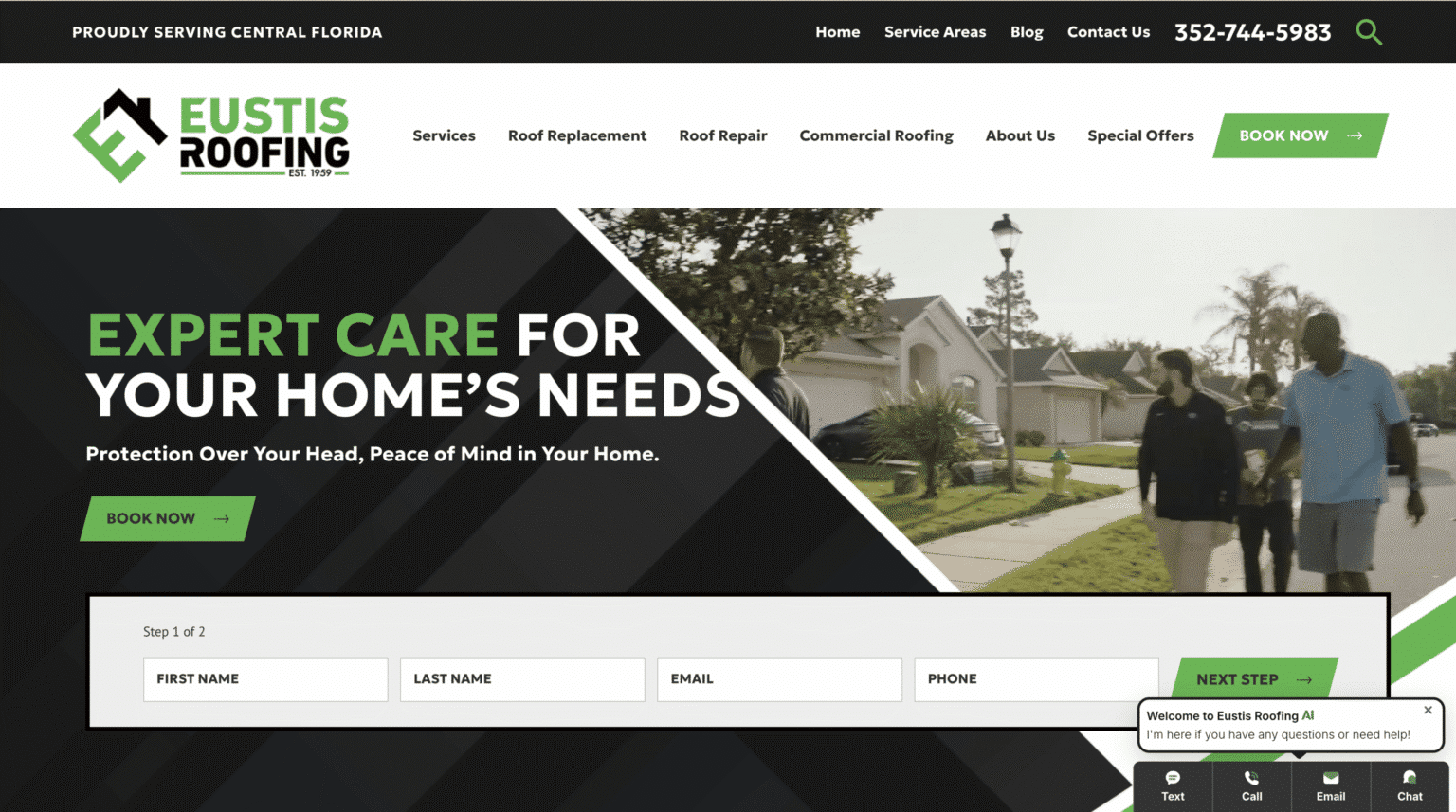
Mobile usability matters too. A surprising number of contractor websites still feel like they were designed from a desktop outward. Buttons are small. Contact details are buried. Pages load slowly. On a phone, that creates friction where you can least afford it.
Hidden costs that change the equation
This is where many buying decisions go sideways.
Website quotes often look straightforward until you start asking what is not included. Copywriting is a common gap. So is content planning. Hosting, SSL or security, updates, backups, maintenance, and future edits can all show up later as separate costs. A cheap build can end up costing more over time than a higher monthly service that includes ongoing support.
The most expensive website is not always the one with the highest sticker price. Sometimes it is the one that launches cheaply and then charges you for every practical need after the fact.

When owners ask me what to watch for, I usually point them to a short set of red flags:
- Vague pricing that does not clearly say what is included after launch.
- Unclear ownership of the domain, hosting, or core accounts.
- No direct access to the accounts tied to the site.
- No stated plan for backups, security updates, or ongoing maintenance.
- No explanation of how future edits are handled and billed.
If a proposal gets fuzzy around those points, slow down.
When a contractor website redesign becomes necessary
Some businesses do not need a new site from scratch. They need an honest answer about whether the current one still works.
A contractor website redesign is usually worth considering when the site looks outdated, loads slowly, is not mobile-friendly, or no longer reflects the business you are actually running. The same goes if it is missing key service pages, hard to edit, thin on trust, or misaligned with your current service area.
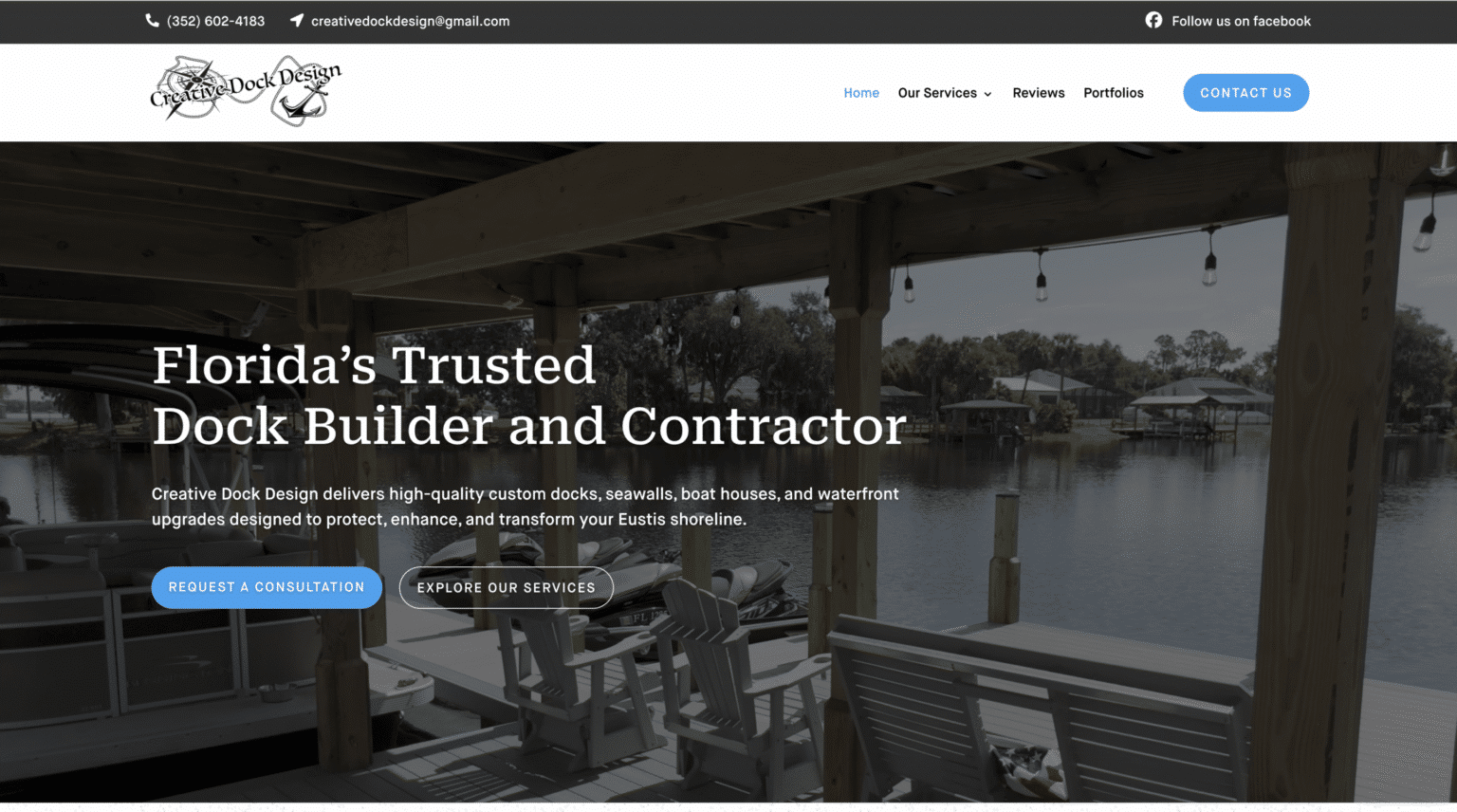
I have seen contractors hold onto weak sites because they were technically “done.” But if the homepage still talks like a startup from three years ago, while the company has grown into a more established operation with stronger projects and broader coverage, the website is no longer helping. It may even be undermining the sales process by making the company appear smaller or less specialized than it really is.
For concrete coating companies, this happens a lot after growth. The original site may have been built when the business mainly did local garage floors. Later, the company adds more service areas, develops better project photos, and starts handling more varied jobs. At that point, the old site is not just stale. It is inaccurate.
The smartest question is not “what is cheapest?”
It is “what will still feel workable six months after launch?”
That is the question many owners skip. They compare upfront numbers but ignore how the relationship will function once the site is live. If every small change becomes a delay, a ticket, or an unexpected invoice, the website becomes dead weight.
The right choice usually matches your appetite for involvement. Some owners want control and do not mind learning systems. Some want a trusted web designer for contractors they can call when needed. Some want a team. Some want the website handled the way they want payroll, bookkeeping, or IT handled, reliably, with minimal friction.
There is no single best website builder for contractors and no universal right answer between DIY, freelancer, agency, and managed service. But there is a right fit for the stage of business you are in.
If your concrete coating company needs a basic web presence and you have more time than money, keep it simple and build lean. If you need stronger execution but still want flexibility, hire carefully. If your web presence needs to carry more weight, spend accordingly. And if what you really want is a professional site without inheriting another technical problem, a managed website model is hard to ignore.
For most contractors, the best website decision is the one that keeps the phone number visible, the message clear, the ownership secure, and the future edits easy. Everything else is decoration.